Going solar? Synergy handles your Eskom SSEG registration end-to-end, compliant and hassle-free. Get a free consultation →
Hydronic underfloor heating, installing since 2010

Hydronic Water Underfloor Heating: Solar-Ready Home Heating for South Africa

Hydronic water underfloor heating is the quietest, most energy-efficient way to warm a home in South Africa. Synergy designs, installs and commissions complete systems from Centurion, Cape Town and Polokwane, saving homeowners up to 70% on heating costs, or up to 90% when paired with a solar PV installation.

R1,350 to R1,750
per m² (m2) installed, incl VAT, for most whole homes. From R950 in specific cases.
35 to 45 °C water in the floor Low enough for an inverter heat pump to deliver three to four units of heat per unit of electricity, and to run on your own solar during the day.

How it works Components Specifications Installation Price FAQ Reviews

430+
Underfloor heating projects
2010
Designing and installing since
4.7
Google rating, 85 reviews
3
Branches: Centurion, Cape Town, Polokwane
100 km
Free site assessment radius per branch
CoC
Technician-installed, electrician-certified

The short answer. Synergy Energy Solutions installs hydronic water underfloor heating from three branches: Centurion (Gauteng HQ), Cape Town (Western Cape) and Polokwane (Limpopo), with one phone number for all three, 010 601 6464. Whole-home systems cost from R950 per square metre (m2), most homes R1,350 to R1,750 incl VAT, and save up to 70% on heating costs, or up to 90% with solar PV. SAPVIA member, PV GreenCard accredited, ECA member. Installed to SANS 10142 electrical standards and EN 1264 underfloor heating guidance, with a 50-year expected pipe life. Also called wet underfloor heating or radiant floor heating: the same warm-water pipes under the floor.

What we do

Quiet, even warmth: powered by warm water, not hot air

Sixty-nine seconds of a real Synergy installation, from pipe layout and pressure test to manifold, heat pump and commissioning.

Synergy hydronic underfloor heating walk-through: a real installation from pipe layout to commissioning

Hydronic underfloor heating circulates low-temperature warm water (35 to 45 °C) through oxygen-barrier PEX pipes embedded in your floor screed, turning the entire floor into one enormous, gentle radiator. Heat rises evenly across the room from the floor up, the "warm feet, cool head" comfort that radiators and forced-air systems can't match.

  • End-to-end design, supply, installation and commissioning. Every system is technician-installed, electrician-certified and handed over with a Certificate of Compliance covering the installed work.
  • Room-by-room heat-load calculations and zone design, no one-size-fits-all packages.
  • Pressure-tested to 6 bar before the screed pour, and again at commissioning.
  • Compatible with inverter heat pumps, gas and electric boilers, biomass and solar thermal. Because the water runs at only 35 to 45 °C, an inverter heat pump delivers three to four units of heat for every unit of electricity used.
  • Installed to SANS 10142 electrical standards and EN 1264 underfloor heating guidance.
SAPVIA member ECA member PV GreenCard accredited SANS 10142 / EN 1264

The Synergy difference. Every system is engineered room by room: we calculate heat loads, map pipe layouts and select a heat source sized for your actual living patterns, not a one-size-fits-all package. What it costs, phase by phase, is on the underfloor heating cost page.

Key benefits

Why South African homeowners choose hydronic heating

A single system delivers comfort, energy savings, healthier indoor air and design freedom, without the noise, dust and running costs of traditional heating.

Save up to 70% on heating costs

Low-temperature operation plus a high-efficiency inverter heat pump cuts heating energy by up to 70% compared with resistive heaters, or up to 90% when the heat pump runs on a Synergy solar PV system.

Healthier indoor air

Dry, warm floors suppress house dust mites, and the absence of blown air is a meaningful comfort upgrade for households with asthma or allergies, particularly in pollen-heavy Gauteng and Cape winters.

Smart-home ready controls

Schedule heating per zone, monitor runtime and tweak temperature from your phone. Wi-fi thermostats integrate with modern smart-home platforms and with Synergy's solar monitoring.

Design freedom

No radiators, no bulky heaters, no visible ducting. Every square metre of wall space is yours, and you can finish your floors in tile, stone, engineered timber or polished screed.

50-year pipe lifespan

PEX oxygen-barrier pipe has an expected service life of up to half a century, meaning your investment sits quietly under the floor for decades, outlasting most boilers, heat pumps and air-conditioning units.

Silent, invisible comfort

No fans, no ducts, no radiators, no exposed hot surfaces. Hydronic underfloor heating is a closed loop of water hidden in the screed, perfect for families with young children and for open-plan Cape Town and Gauteng homes. It suits double-volume rooms better than any other system: the heat starts at floor level, where people are, instead of collecting under a five-metre ceiling.

System components

The five building blocks of every Synergy installation

Every hydronic underfloor heating system we install is built from five precision components, each chosen for reliability in South African conditions. The perlite floor insulation laid beneath them matters almost as much as the components themselves.

Whole-home PEX-EVO oxygen-barrier underfloor heating pipe layout installed by Synergy Energy Solutions in a South African new build

PEX-EVO pipe

Component 1
  • EU-manufactured oxygen-barrier PEX, 16 mm
  • Pressure-tested to 6 bar
  • Up to 50-year expected service life
  • Designed for floor-screed embedding

Top-quality oxygen-barrier PEX. Pressure-tested at install so any incidental damage shows up immediately, before the screed cures.

Brass manifold with thermal actuators, flow meters and zone valves for a multi-zone hydronic underfloor heating system installed by Synergy in South Africa

Manifold and actuators

Component 2
  • Brass manifold
  • Per-zone flow meters and balancing
  • Electric zone actuators
  • Independent room control

Distributes flow to each loop. Actuators open and close valves on command from your thermostats so each room hits its own target temperature.

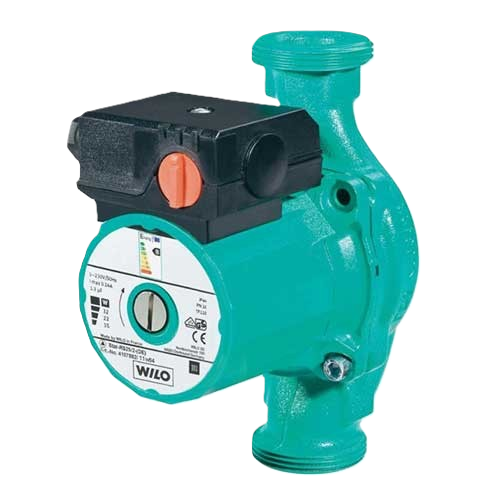
WILO high-efficiency circulation pump with electronic speed control for hydronic underfloor heating systems

Circulation pump

Component 3
  • WILO circulator
  • Electronic speed control
  • Significantly lower pump energy use
  • Quiet operation

WILO circulators move the warmed water through the loops. Electronic speed control cuts pump energy use significantly compared with older fixed-speed pumps.

Samsung inverter heat pump and buffer cylinder installed by Synergy Energy Solutions as the heat source for a hydronic underfloor heating system

Heat source

Component 4
  • Inverter heat pump (recommended)
  • Or fixed-speed heat pump, gas or electric boiler, biomass, solar thermal
  • Multiple sources can be combined
  • Solar PV integration ready

Typically a Samsung inverter heat pump for maximum efficiency. Multiple heat sources can be combined for redundancy, including direct solar PV integration. Gold and Silver options are compared on the cost page.

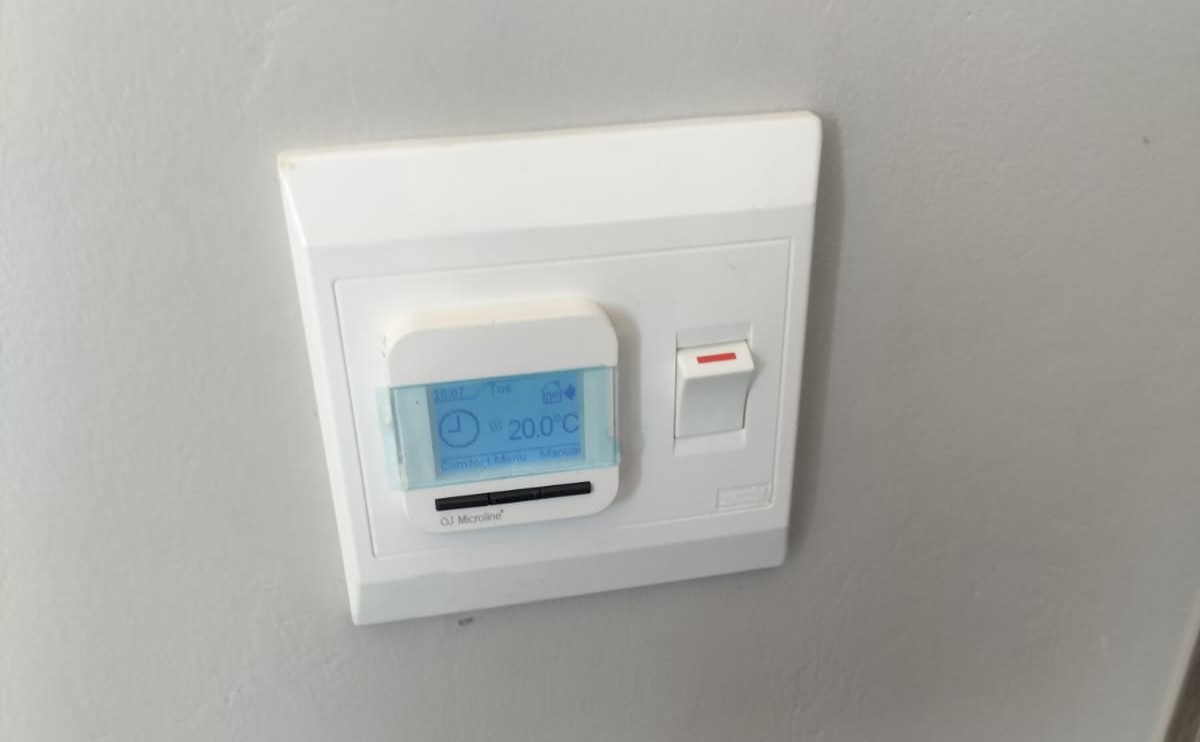
OJ Microline wi-fi smart thermostat controlling a hydronic underfloor heating zone in a South African home

Thermostats and controls

Component 5
  • Per-zone or whole-house
  • OJ digital and wi-fi thermostats
  • Smart-home platform integration
  • Remote monitoring and scheduling

From analog dial thermostats to fully programmable wi-fi controls. Set schedules, create scenes and monitor energy use from anywhere.

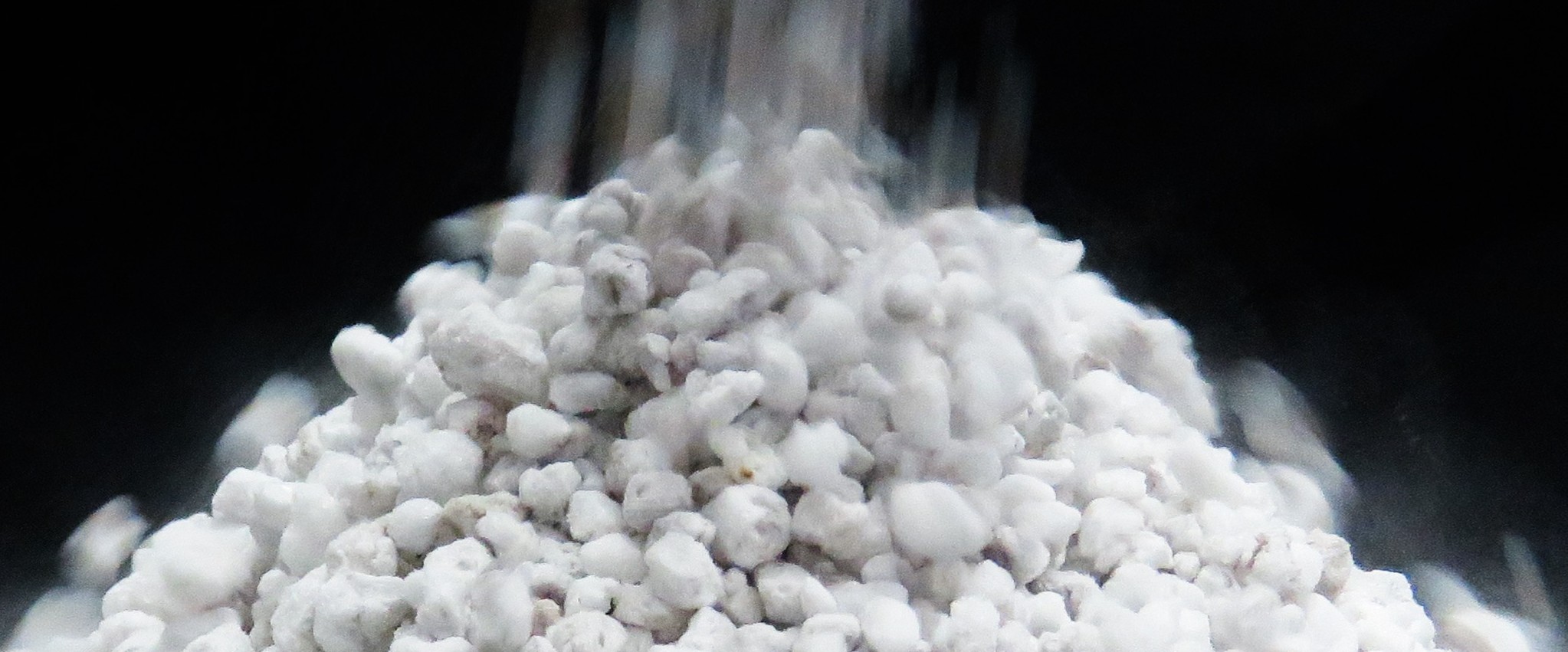
SUNPERL natural perlite, volcanic-rock insulation material laid as a perlite-cement screed beneath hydronic underfloor heating pipes to reduce downward heat loss

Perlite floor insulation

Recommended on every installation
  • 20 mm SUNPERL perlite-cement screed under the pipes
  • Cuts downward heat loss into the slab by up to 10%
  • Faster warm-up, more even floor
  • Separate line, from R185 per m² incl VAT

Insulation isn't a heating component, but it's the single biggest lever on running cost. We recommend it on every installation.

Perlite floor insulation
System design and floor build-up

The technical specs that make our systems last

We install only European-standard components engineered for underfloor heating. Every system is pressure-tested to 6 bar during installation and commissioned to strict temperature and flow targets.

Hydronic underfloor heating standard design specification
SpecificationSynergy standard
PipePEX-EVO oxygen-barrier, 16 mm, EU-manufactured, expected life up to 50 years
Operating water temperature35 °C to 45 °C (low-temperature system)
Recommended screed thickness40 mm to 70 mm over the pipes (65 mm typical) plus 5 to 25 mm floor finish
Floor insulation20 mm SUNPERL perlite-cement screed under the pipes, recommended on every floor
Installation pressure test6 bar, maintained through screed pour and cure
ManifoldBrass manifold with individual zone valves, flow meters and balancing
Circulation pumpWILO high-efficiency circulator with electronic speed control
Compatible heat sourcesInverter heat pump, fixed-speed heat pump, gas boiler, electric boiler, solar thermal, biomass
Compatible floor finishesTile, porcelain, natural stone, engineered wood, specified vinyl, polished screed. Engineered wood and vinyl zones run with the floor surface capped at 27 degrees to protect the finish; tile and stone can run warmer.
ControlWired or wi-fi thermostats; per-zone or whole-house; smart-home compatible
StandardsSANS 10142 electrical standards; pipe work to EN 1264 underfloor heating guidance
Water underfloor heating floor build-up Isometric cutaway: floor finish over a screed with 16 mm oxygen-barrier pipe on mesh, over perlite insulation, over the concrete slab. Floor finish5 to 25 mm: tile, stone, wood or vinylScreed, pipes inside it40 to 70 mm over the pipes, 65 mm typicalPerlite insulation20 mm perlite-cement screed, recommendedConcrete slabOr the pipes can be cast into the slab itself16 mm oxygen-barrier pipeClipped to mesh, 6 bar test, held through the pour Water at 35 to 45 degrees in the loops. Pipe spacing is set by the room-by-room heat-load design. Not to scale.
The floor build-up for water underfloor heating, top to bottom. Pipes can be laid in the screed above the slab (faster response, simpler retrofit) or cast into the slab itself (slower to warm, excellent heat storage).

New build or renovation? Pipes can be laid either in the concrete slab (in-slab, slower to warm, excellent heat storage) or in the screed above it (in-screed, faster response, the usual choice for renovations). Our system designers recommend the right configuration on the site assessment, based on your build schedule and how you live.

Weighing hydronic against electric, radiators or aircon? The underfloor heating hub compares water and electric systems side by side, and the cost page shows what each option, wood stove and gas fireplace included, costs to run per kilowatt-hour of heat. We keep those tables in one place so they can't contradict each other.

What to expect

From free assessment to warm floors in six steps

We coordinate closely with your builder, architect and electrician to deliver a fully commissioned hydronic underfloor heating system without delaying your build programme.

Free site assessment

Our system designers measure heated areas, check insulation plans, review your build schedule and discuss heat-source options with you. We also confirm whether the project is a new build or a retrofit, because that drives almost everything that follows.

Design and fixed quote

Zone-by-zone design, room-by-room heat-load calculations and a written quote in five phases. Pipe spacing, manifold position, heat-source sizing and control strategy are all locked down before any pipe arrives on site. The build-stage phases are fixed on deposit.

Pipe install and pressure test

Pipes are clipped to the slab or the perlite insulation, connected to the brass manifolds and pressurised to 6 bar. The pressure is held through the screed pour so any incidental damage shows up immediately, before the screed cures.

Screed pour

Your builder pours the floor screed with the system pressurised. We coordinate timing with the construction programme so other trades aren't held up. Once cured, the screed becomes the thermal mass that gives hydronic heating its even, steady warmth. Nothing is switched on for 21 days after screeding. Before that, the builder provides four things: a wall chase for the manifold enclosure (about 900 x 1300 mm), a conduit from each thermostat position to the enclosure, a level base for the heat pump, and an open trench for the feed lines before the slab. We send the full builder's requirements list on acceptance; it's also on the cost page.

Heat pump and controls

Heat pump, manifold pump assembly, actuators and thermostats are installed, wired and configured. Every installation is technician-installed and electrician-certified to SANS 10142, with any solar PV integration or smart-home tie-in completed at this stage.

Commissioning and handover

We balance the system, verify flow rates and temperatures against the design, walk you through the controls and the app, and hand over your Certificate of Compliance and warranty documentation: technician-installed, electrician-certified, CoC issued. From then on, our Centurion, Cape Town and Polokwane branches provide ongoing support for the lifetime of the system.

The pipes go in with the screed; the rest can follow. Only the heating pipe and the buried feed lines have to be installed when the floor is poured, about R500 to R660 per m² incl VAT. The loops are filled and held at 4 to 6 bar with a gauge on the manifold, and the manifolds, controls and heat pump can be added later as your budget allows, 12 to 36 months on is routine. How phasing works, what it costs and what protects the floor while you wait are on the cost page.

Book your free site assessment

What it costs

Hydronic underfloor heating cost in South Africa, in three numbers

Installed prices per square metre, incl VAT, from our own 2026 quotes. The full breakdown lives on one page so it can't drift.

From R950 / m²
Specific cases
Large open-plan areas, thermostats shared across rooms, Silver spec, insulation already in the slab.
R500 to R660 / m²
Build stage only
Pipes and buried feed lines, the only part that has to go in with the screed. The rest can wait.

Smaller areas cost more per m2 because the heat pump, manifold and controls are similar in size whatever the floor area: partial homes typically run R1,400 to R1,800 per m², and bathrooms only from R1,500, usually R1,800 to R2,600. Complex homes with many small rooms, and homes with perlite floor insulation under the whole floor, reach R2,000 and more. Commercial floors are quoted per project from about R1,200 per m². The underfloor heating cost page has the five phases and their shares, two real whole-home jobs priced phase by phase, the Gold and Silver comparison, running cost against wood, gas, aircon and electric, and what a builder needs to provide. Prices as at September 2026, reviewed every year; your figure is fixed in writing after a free site assessment.

Where hydronic is the wrong answer

One bathroom or one bedroom. A full heat pump, manifold and control set for a small area is the most expensive configuration we sell per m². Electric underfloor heating costs less to install there, and the running cost stays manageable because the area is small.

Finished floors you don't want to lift. Hydronic needs 40 to 70 mm of screed over the pipes. If the floors are staying, carbon fibre wall heating warms whole rooms without touching them.

Heat on demand. A screed floor takes hours to change temperature. It's a set-and-leave system for a house you live in all winter, not something to switch on when guests arrive. If that's what you want, a reverse-cycle aircon is the honest recommendation, and we'll tell you so on the site assessment.

FAQ

Hydronic heating questions answered

Ten of the most common questions we field from homeowners in Gauteng, the Western Cape and Limpopo. Don't see yours? Send it through and we'll answer personally.

Can I install water underfloor heating in an existing home or is it only for new builds?

Yes, hydronic underfloor heating can be retrofitted into existing homes, but it costs more because the floors must be lifted and the minimum screed depth must be achievable. For most older South African homes we recommend installing during a renovation when the floors are already being redone. For a single room on an existing floor, electric underfloor heating is the practical route; where whole rooms need heating without lifting floors, carbon fibre wall heating is the less invasive alternative.

How thick should the screed be for hydronic underfloor heating?

We recommend a screed thickness of between 40 mm and 70 mm over the heating pipes, with 5 mm to 25 mm of floor finish on top depending on the material. A thicker screed stores more heat and responds more evenly; a thinner screed heats faster but limits the range of floor finishes that can be used. Engineered wood and specified vinyl zones are designed to a maximum floor surface temperature of 27 degrees, held by the floor probe at that zone's thermostat, because that is the limit the flooring manufacturers set to protect the finish. Tile, porcelain and stone can run warmer.

Do I need to install insulation under the floor heating pipes?

Yes, we recommend insulation under the pipes on every installation. A 20 mm SUNPERL perlite-cement screed cuts the heat bleeding down into the slab by up to 10%, warms the floor faster and is the single biggest lever on running cost. It's quoted as its own line from R185 per m² incl VAT. If insulation isn't possible on a retrofit, we compensate through higher flow rates, longer run times and a larger heat source. See SUNPERL perlite floor insulation.

Can I heat only some rooms such as the bathrooms and living areas?

Yes, partial installation is possible and common in South African homes. The cost per square metre rises as the area shrinks because the heat pump, manifold and controls stay similar in size: partial homes typically run R1,400 to R1,800 per m² against R1,350 to R1,750 for a whole home. We'll design the most efficient zoning for the rooms you actually use most.

How do I control the temperature of the system?

You can use a single master thermostat for the entire house, or individual thermostats per room or zone. Modern wi-fi thermostats integrate with smart-home platforms so you can schedule heating, track consumption and adjust temperatures remotely from your phone.

What heat sources can power the underfloor heating?

Hydronic systems work with a wide range of heat sources: inverter heat pumps (our most efficient recommendation), fixed-speed heat pumps, electric boilers, gas boilers, biomass boilers and solar thermal. We often combine a heat pump with solar PV through your inverter so the bulk of the heating energy is free daytime solar, and a system can be commissioned on a cheaper heat source now and upgraded to an inverter heat pump later without draining the floor.

What does water underfloor heating cost per square metre in South Africa?

Whole-home systems cost from R950 per square metre (m2) installed, incl VAT, and most homes land between R1,350 and R1,750. Partial homes typically run R1,400 to R1,800, and bathrooms only from R1,500 up to R2,600, because the heat pump, manifold and controls remain similar in size whatever the area. Complex homes and homes with perlite insulation under the whole floor reach R2,000 and more. Only the build-stage work, about R500 to R660 per m², has to go in with the screed. The cost page breaks it down phase by phase with two real jobs. We provide a fixed written quote after a free on-site assessment.

Is hydronic underfloor heating safe and low-maintenance?

Yes. The system is fully concealed in the floor screed, with no hot surfaces to touch and no moving parts in living spaces. The PEX oxygen-barrier pipe has a life expectancy of up to 50 years, and annual maintenance is limited to a routine heat pump service. There are no radiators, fans or ducts to clean.

How long does installation take?

For a typical 180 m² new-build home, pipe installation takes 2 to 4 working days and is coordinated with your builder before the screed is poured. Heat pump, manifold and commissioning are completed in a further 1 to 2 days once the screed has cured, which takes 21 days. Retrofit projects take longer because of floor removal.

Does hydronic underfloor heating work with solar PV?

Yes, pairing hydronic heating with a solar PV system is the single most effective way to cut running costs. Because the heat pump runs on electricity, solar-generated power heats your floors during the day at near-zero cost. Combined with a battery, it is possible to run the system almost fully off-grid in Pretoria, Johannesburg and Cape Town conditions.

Reviews

Trusted by homeowners across South Africa

Real reviews from real Synergy customers, sourced directly from our Google Business Profile.

★★★★★ 4.7 / 5 Based on 85 Google reviews
★★★★★
"I couldn't be more thrilled with my decision to go solar, and Synergy Energy Solutions made the entire process seamless and enjoyable. From the initial consultation to the final installation, their professionalism, expertise, and dedication to customer satisfaction were evident every step of the way. The installation crew was punctual, efficient, and left my property spotless."
Business client
★★★★★
"Thank you Jacques and Jaco from Synergy Energy Solutions. Your professionalism and excellent service resulted in a great solar installation and solution. We are very happy and would recommend you to anyone looking for a residential or commercial solution. We can vouch for both. Well done."
★★★★★
"What an absolute pleasure to have Synergy as my solar provider. After I have been scammed previously by a 'reputable' company, I was unsure where to turn next. Synergy was recommended and from day one they exceeded my wildest expectations. Very professional, always friendly, prompt service and the list goes on. Thank you Jean and team, you guys rock!"
★★★★★
"What a pleasure to deal with Synergy, it's a company with experience and after-care service. Jacques always takes my calls (and there were many) during and after the installation, always willing to assist, always monitoring our system for optimal usage. Our site was always clean, they were always on time. Jacques and team, thank you, it's much appreciated."
★★★★★
"Synergy Energy Solutions is an excellent company, very good workmanship as requested. The system looks neat and professional. Thank you also for the over-and-above tasks that were performed for the preparation of the installation. The system has been running for a month now, I was always immediately assisted by competent personnel. The form, fit and function of the system is awesome!"
Local Guide
★★★★★
"I have used Synergy Solutions to do solar installations on two separate occasions. In both instances I found them to be speedy, professional, friendly and extremely competent. I can highly recommend them."
Repeat customer

Read all 85 reviews on our Google Business Profile.

About Synergy Energy Solutions

Established in 2010 and headquartered in Centurion, Synergy Energy Solutions has spent 16 years designing solar PV, battery storage, heat pump water heating and hydronic underfloor heating systems for residential and commercial customers across Gauteng, the Western Cape and Limpopo.

2010
Established
16
Years experience
1,700+
Solar systems commissioned
2,200+
Heat pump water heaters
430+
Underfloor heating projects
3
Branches
Coverage

Hydronic heating installations from three branches

Our underfloor heating installers work from Centurion (Gauteng), Table View (Western Cape) and Polokwane (Limpopo). The site assessment is free within 100 km of each branch; beyond that, travel is quoted as a separate line upfront. One phone number for all three: 010 601 6464.

Gauteng branch (HQ)

Pretoria, Johannesburg, Centurion, Sandton, Midrand, Kempton Park, Hartbeespoort, Krugersdorp, Roodepoort

30 Pretorius Avenue, Lyttelton Manor, Centurion, 0157
010 601 6464

Book assessment

Western Cape branch

Cape Town, Table View, Stellenbosch, Paarl, Somerset West, Cape Winelands

Unit 202, 10 Blaauwberg Road, Table View, Cape Town, 7439
010 601 6464

Book assessment

Limpopo branch

Polokwane, Tzaneen, Mokopane, Bela-Bela, Lephalale, Thohoyandou

47 Platinum Street, Polokwane Ext 17, Polokwane, 0699
010 601 6464

Book assessment
Accreditations and memberships

Our industry memberships and certifications

Synergy Energy Solutions is accredited by South Africa's electrical, solar and battery industry bodies, and by the manufacturers we install, your assurance of compliant, professional installation across every solar PV, battery and hydronic heating system we deliver.

ECA

Member of the Electrical Contractors' Association of South Africa, the industry body for registered electrical contractors.

PV GreenCard

An industry-led quality label for safe, compliant small-scale solar PV installations across South Africa.

SAPVIA

Member of the South African Photovoltaic Industry Association, the body representing the solar PV industry and setting installation, training and quality standards.

Tesla Energy Certified Installer

Trained and authorised by Tesla to design, install and service Powerwall 3 systems in South Africa.

Sigenergy Certified Installer

Factory-trained to design, install and commission SigenStor solar, battery and EV charging systems.

Sunsynk Approved Installer

Approved to design, install and commission Sunsynk hybrid inverters and Sunsynk lithium battery systems.

Deye Recognised Installer

Experienced in the design, installation and commissioning of Deye hybrid inverters and Deye-compatible batteries.

Warm your home with hydronic underfloor heating

Book a free, no-obligation site assessment. Our system designers will design a system around your floor plan, your insulation, your budget and your build schedule, and coordinate with your builder and electrician.

Free, no obligation. Our system designers review every enquiry personally.

Prefer to talk? Call 010 601 6464 or WhatsApp 069 272 5602

Get a free quote