"I couldn't be more thrilled with my decision to go solar, and Synergy Energy Solutions made the entire process seamless and enjoyable. From the initial consultation to the final installation, their professionalism, expertise, and dedication to customer satisfaction were evident every step of the way. The installation crew was punctual, efficient, and left my property spotless."
Underfloor Heating in South Africa: Water or Electric, Designed and Installed by Synergy
Three systems, one installer. Water (hydronic) underfloor heating for whole homes and new builds, electric underfloor heating for one or two rooms being tiled, and carbon fibre wall heating for homes where the floors are staying. Synergy designs, installs and certifies all three from Centurion, Cape Town and Polokwane, and tells you which one your house actually needs.
Which one? Side by side How each works Wall heating Running cost Where we install FAQ
The short answer. Synergy Energy Solutions installs both types of underfloor heating in South Africa from three branches: Centurion (Gauteng HQ), Cape Town (Western Cape) and Polokwane (Limpopo), one phone number for all three, 010 601 6464. Water (hydronic) underfloor heating suits whole homes, new builds and renovations where the floors are coming up: R1,350 to R1,750 per m² incl VAT for most homes, from R950 in specific cases, run by an inverter heat pump that delivers three to four units of heat per unit of electricity. Electric underfloor heating suits one or two rooms being tiled: a Warmup undertile cable in the adhesive under the tiles, R635 to R865 per m² incl VAT for larger tiled rooms and R920 to R1,325 for bathrooms and wet rooms, no screed and no plant room, but one unit of electricity for every unit of heat. Where the floors are finished and staying, carbon fibre wall heating is the third option: a 48 V DC conductive film bonded to the wall or ceiling behind plaster, paint, tiles or wallpaper, from about R1,150 per m² of floor, sized at 50 W per m² against the 100 W per m² of an electric floor, fitted in days and coupled directly to a solar battery. All three are technician-installed, electrician-certified and handed over with a Certificate of Compliance.
Water for the house, electric for the room, wall heating when the floor stays
Most of the heating advice online is written by companies that sell one system. We install all three, so the recommendation follows the house, not the product.
Water (hydronic) underfloor heating
Warm water at 35 to 45 °C in PEX pipes cast into the screed. The floor becomes one large, gentle radiator and an inverter heat pump does the work, which is why it costs the least to run of any whole-home heating we sell.
- R1,350 to R1,750 per m² incl VAT, most whole homes
- Up to 70% cheaper to run than resistive heating, 90% with solar
- Needs 40 to 70 mm of screed over the pipes
- Only the pipes have to go in with the pour; the rest can wait
Electric underfloor heating
A Warmup undertile heating cable on mesh, set in the tile adhesive or a 3 to 5 mm levelling screed, with an OJ thermostat and a floor probe. No screed, no heat pump, no manifold. A warm tile in 30 to 60 minutes, and the right answer while the area is small enough that running cost doesn't dominate.
- R635 to R865 per m² incl VAT for larger tiled rooms, R920 to R1,325 for bathrooms and wet rooms
- Goes in with the tiling, 5 to 8 mm plus the tile
- One unit of electricity makes one unit of heat
- Covers about 60% of the floor, the part you walk on; tile and stone only
Carbon fibre wall heating
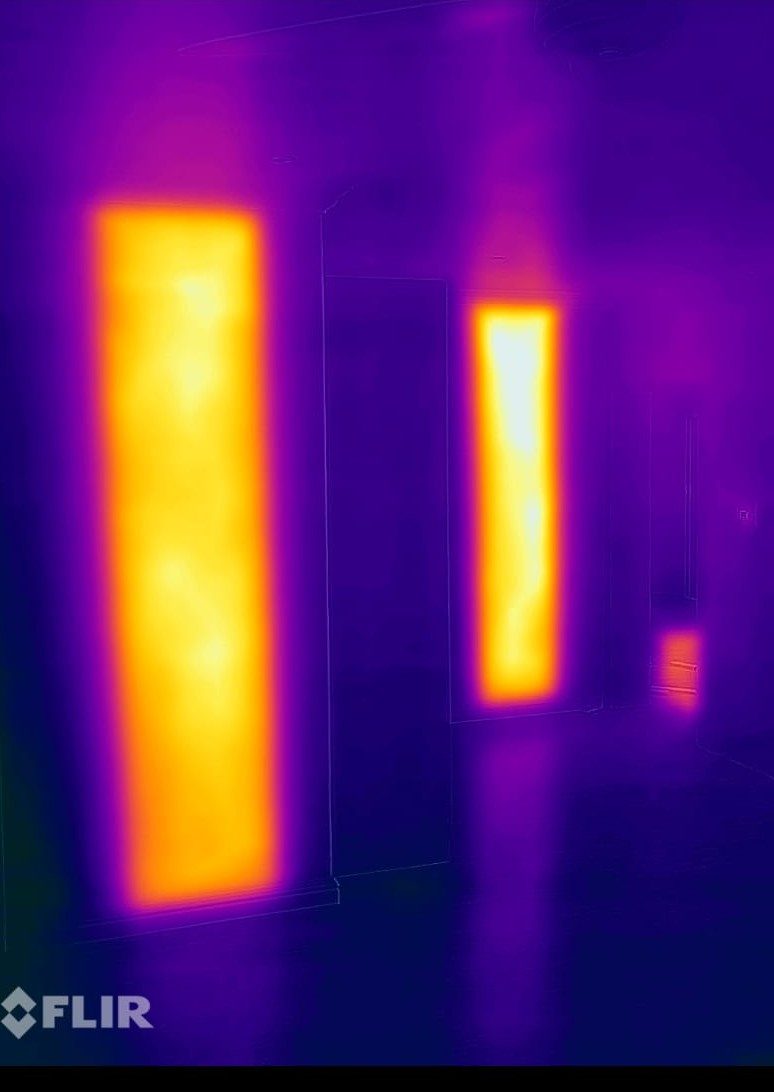
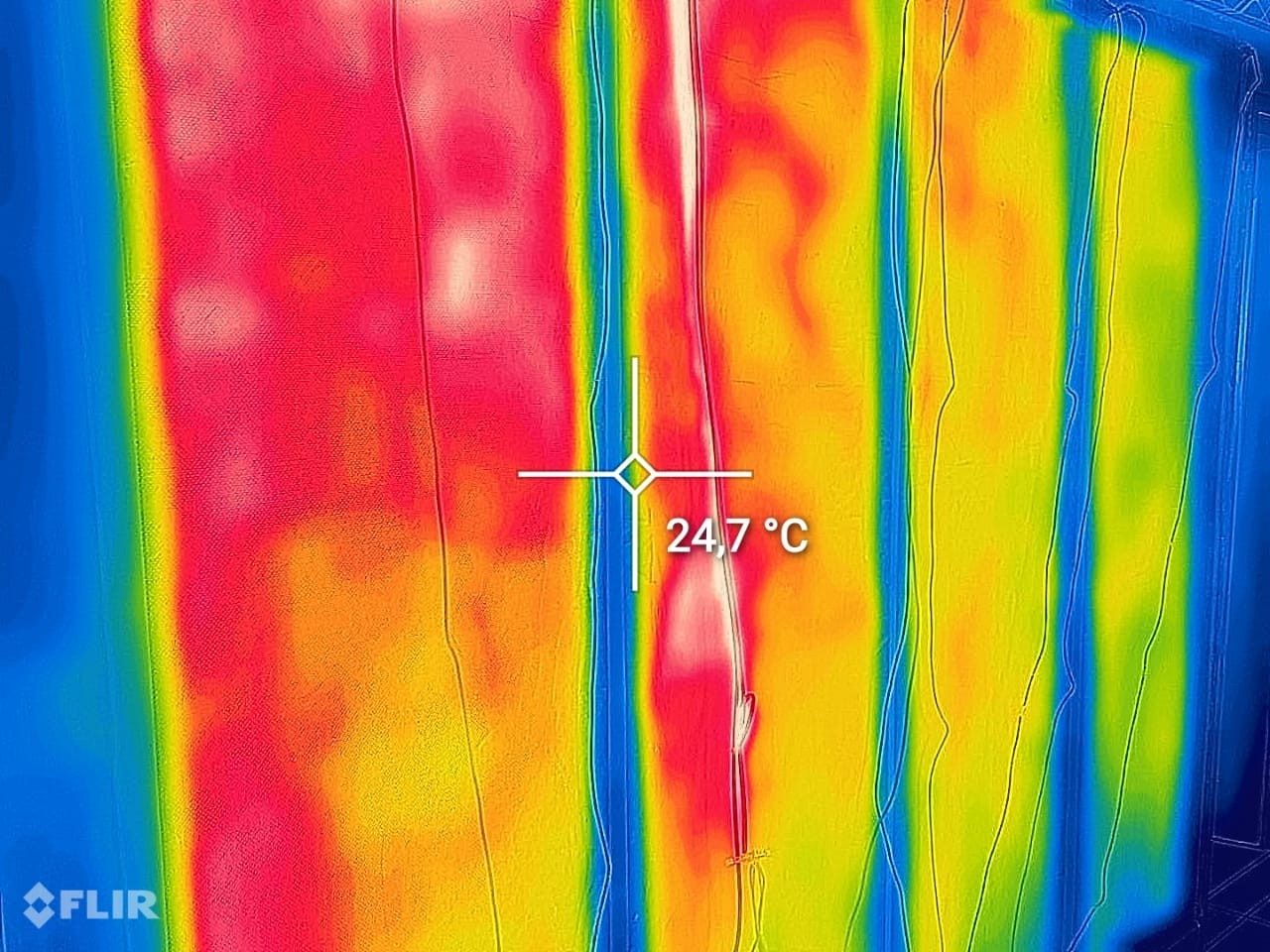
Not underfloor heating at all, but it's the honest answer for a lot of the people who land on this page. A conductive carbon fibre film bonded to the wall or ceiling, fed at 48 V DC, radiates infrared warmth into the room from behind the plaster, paint, tiles or wallpaper. The floor is never touched.
- From about R1,150 per m² of floor, whole-home systems
- Sized at 50 W per m² of floor, half the watts of an electric floor; up to 90% less to run on solar
- Fitted in days during redecorating, not weeks
- 48 V DC, below the SANS 10142 shock-hazard threshold, couples directly to a solar battery
How our system designers choose between water and electric
This is the same logic we run on every site assessment. If you can answer these three, you'll usually know before we arrive.
How much floor are you heating?
One or two rooms, 10 to 40 m²: electric. A full hydronic set for a bathroom is the most expensive thing we sell per m², from R1,500; an electric floor there costs R5,500 to R8,000 in rand terms and the small area keeps the bill sane.
From the third room on: water. The heat pump, manifold and controls are a fixed cost that gets cheaper per square metre as the area grows, and the running cost gap, about four to one, compounds every winter. A 30 m² living room is where water starts to make sense.
Are the floors coming up?
New build, or floors being redone: water is on the table. The pipes need 40 to 70 mm of screed over them, so they go in before the pour, and the rest of the system can follow later if the budget needs it (the phased water option on the cost page).
Retiling one room: electric goes in with the tile adhesive, no screed needed.
Floors staying put: neither. Carbon fibre wall heating goes on the wall or ceiling during redecorating, and the room is back in use in days.
All-winter warmth or heat on demand?
A house you live in all winter: water. A screed floor takes hours to change temperature; it's a set-and-leave system that holds a steady warmth at low cost.
A bathroom at 6 am: electric. A warm tile in 30 to 60 minutes, scheduled from the thermostat so it's on from 05:30 to 07:30 and off the rest of the day.
A finished room that's cold: wall heating. The film warms the wall surface quickly and cycles off under the thermostat, so it's on-demand warmth without a floor in the way.
Two or three of these in one house: common. Water through the living areas, electric in a guest bathroom, wall heating in the room above the garage. We design and certify the mix.
Water, electric or wall heating: the comparison in one table
This is the only place on the site this table lives, so the three system pages can't drift away from each other. Prices are our own 2026 installed prices, incl VAT, reviewed every year.
| What matters | Water underfloor | Electric underfloor | Carbon fibre wall |
|---|---|---|---|
| Best for | Whole homes, new builds, big renovationsLiving areas, bedrooms, open-plan spaces, commercial floors | One or two rooms being tiledBathrooms, a nursery, a cold study; the crossover to water is around the third room | Existing homes where the floors are stayingRooms above the slab, retrofits, any room being redecorated |
| Installed price per m² | R1,350 to R1,750 incl VAT most whole homesFrom R950 in specific cases; partial homes R1,400 to R1,800; bathrooms only R1,500 to R2,600 | R635 to R865 incl VAT larger tiled roomsBathrooms and wet rooms R920 to R1,325; a whole house averages R800 to R1,254 (R550 to R1,150 ex VAT). A 6 m² bathroom is R5,500 to R8,000 | From about R1,150 incl VAT per m² of floor, whole-home systemsQuoted per room from the site assessment; no tiling or screed in the price |
| What has to go in at build stage | Pipes and buried feed lines only, R500 to R660 per m² incl VATManifolds, controls and heat pump can follow 12 to 36 months later | The whole system, with the tilingNothing to phase and nothing to upgrade later: once it's under the tiles it's electric for the life of the floor | Nothing. It goes on during redecoratingBefore plaster, paint, tiles or wallpaper |
| How it makes heat | Warm water at 35 to 45 °C in 16 mm PEX pipes cast in the screedHeat source: inverter heat pump, or boiler, biomass, solar thermal | Warmup undertile cable on mesh, in the adhesive or a 3 to 5 mm levelling screedSized at 100 W per m² of room, 70 or 100 mm spacing | A conductive carbon fibre film bonded to the wall or ceiling, radiating infrared into the roomSized at 50 W per m² of floor: one 220 W panel warms just over 4 m² of room |
| Heat per unit of electricity | 3 to 4 units of heat per unit of electricity with an inverter heat pump | 1 unit of heat per unit of electricity | 1 unit of heat per unit of electricity at the elementBut sized at half the watts per m² of an electric floor, because radiant warmth needs a lower air temperature for the same comfort |
| Running cost | Lowest of any whole-home heating we installUp to 70% below resistive heating, up to 90% with solar PV | About R4.15 per kWh of heat at 2026 municipal rates, four times a heat pumpA 6 m² bathroom about R300 a month; a 30 m² living room about R1,490; a 243 m² house about R100,900 a winter against R23,400 on water | About half an electric floor's, for the same room at the same tariff50 W against 100 W per m² of floor; up to 90% less when fed from your own solar at 48 V DC |
| Runs on solar PV | Yes, and this is where the heat pump shines: daytime solar heats the slab, the slab holds it into the evening | Yes, for one or two roomsNo solar array makes a 20 kW resistive whole-house load sensible | Yes, and directly: the film runs natively on 48 V DC, so it couples to a hybrid inverter and battery without an AC stage |
| Floor build-up | 20 mm perlite insulation, pipes, 40 to 70 mm screed, 5 to 25 mm finishOr pipes cast into the slab itself | About 5 to 8 mm plus the tileOn new builds, 10 mm insulation board or 20 mm perlite under it, quoted separately; retrofits usually go without to keep the floor level | None on the floor. On the wall, the film sits under the finishPlaster, paint, tiles, wallpaper or Rhino-lite over it |
| How much of the floor is warm | All of it: the pipes cover the whole floor and the slab warms as one surface | About 60%: the walk-on area, not under the bath, vanity or unitsWarm strips where you walk; nobody notices in a bathroom, you do across a 40 m² living room | The floor isn't heated; the wall or ceiling surface isWarmth radiates across the room rather than rising from underfoot |
| Response time | Hours. Set and leave for the season | 30 to 60 minutes to a warm tile. Switch on for the morning | The surface warms quickly, then cycles offOn-demand warmth for a room you use in the evening |
| Retrofit into an existing home | Only if the floors come up and the screed depth can be achievedBest done during a renovation | Yes, room by room, whenever a floor is retiled | Yes, that's what it's forFitted in days, not weeks, with no floor lifted |
| Floor finishes | Tile, porcelain, stone, engineered wood, specified vinyl, polished screed | Tile and stoneLaminate and carpet need foil pads laid by flooring fitters, which Synergy doesn't install | Any. The floor is untouchedCarpet, solid timber and laminate rooms included |
| Control | Thermostat per zone, actuators on a brass manifold, wired or wi-fi, smart-home ready | OJ Microline thermostat per room with a floor probe: manual dial, 7-day programmable or wi-fi | Thermostat per room |
| Expected life | PEX pipe up to 50 years; heat pump serviced annually | Warmup 10-year factory-backed cable warranty, 2 years on the OJ thermostat, Synergy workmanship warranty on the installation; nothing to service | No moving parts and no copper element cycling hot and cold, which is what eventually fails in a conventional heater; nothing in the film to wear out |
| Installation and certification | Technician-installed, electrician-certified, CoC issued | Technician-installed, electrician-certified, CoC issued | Technician-installed, electrician-certified, CoC issued48 V DC to SANS 10142 |
All prices incl VAT, fixed in writing after a free site assessment. All three are per m² of floor area; wall heating is quoted per room because how much film a room needs depends on its size, at 50 W per m². Commercial floors are quoted per project, and freezer and cold store floors are a different job altogether: a warm glycol loop under the slab to stop frost heave, on the cold store floor heating page. The underfloor heating cost page carries the phase-by-phase breakdown and running cost against wood, gas, aircon and electric heaters.
What's actually in the floor
The difference between the two underfloor systems is the difference between these two floor build-ups. One needs a screed, one needs tile adhesive. The third system, carbon fibre wall heating, needs neither, because it isn't in the floor at all.
Water (hydronic)
An inverter heat pump warms water to 35 to 45 °C. A WILO circulator pushes it through 16 mm oxygen-barrier PEX loops clipped to the insulation, and a brass manifold splits the flow room by room with an actuator on each loop answering to that room's thermostat. The screed over the pipes is the thermal mass: slow to warm, slow to cool, steady all winter.
Electric
A Warmup undertile heating cable comes pre-spaced on a mesh, 70 or 100 mm apart, cut and turned to cover the walk-on area of the room at 100 W per m². It's set in the tile adhesive or a 3 to 5 mm self-levelling screed, with a floor probe in a conduit between two runs reporting to an OJ thermostat on the wall, which switches the circuit. No pump, no manifold, no heat pump: the electrical supply is the heat source, about 5 to 8 mm under the tile.
Insulation matters more than the brand of either system. Heat goes down as readily as up. A 20 mm SUNPERL perlite-cement screed under water pipes is the single biggest lever on running cost and we recommend it on every water installation. Under an electric cable the same perlite, or a 10 mm insulation board, is a new-build option where the floor levels can absorb it; on a retrofit the floor usually stays level with the next room and the slab takes its share of the heat first. Either way it's quoted as its own line, so you can see what it costs and what it saves.
Carbon fibre wall heating: radiant warmth without touching the floor
Most people arrive at this page asking about underfloor heating and leave with wall heating, because most South African homes already have their floors down. Here's what it is and when we recommend it.
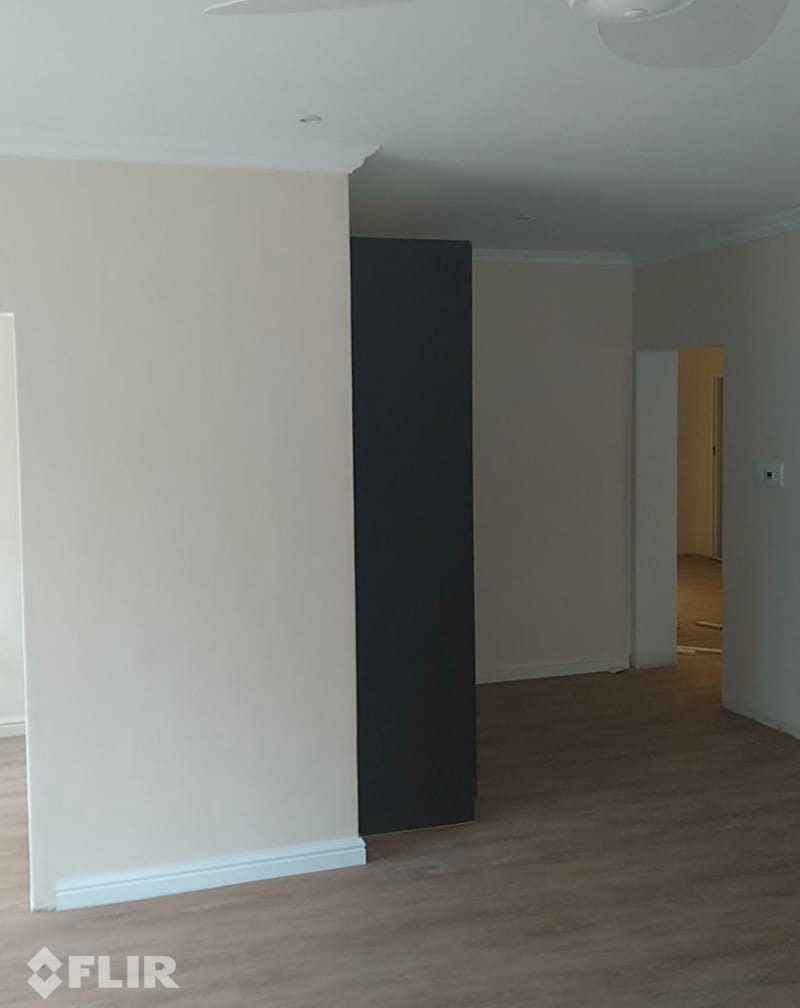
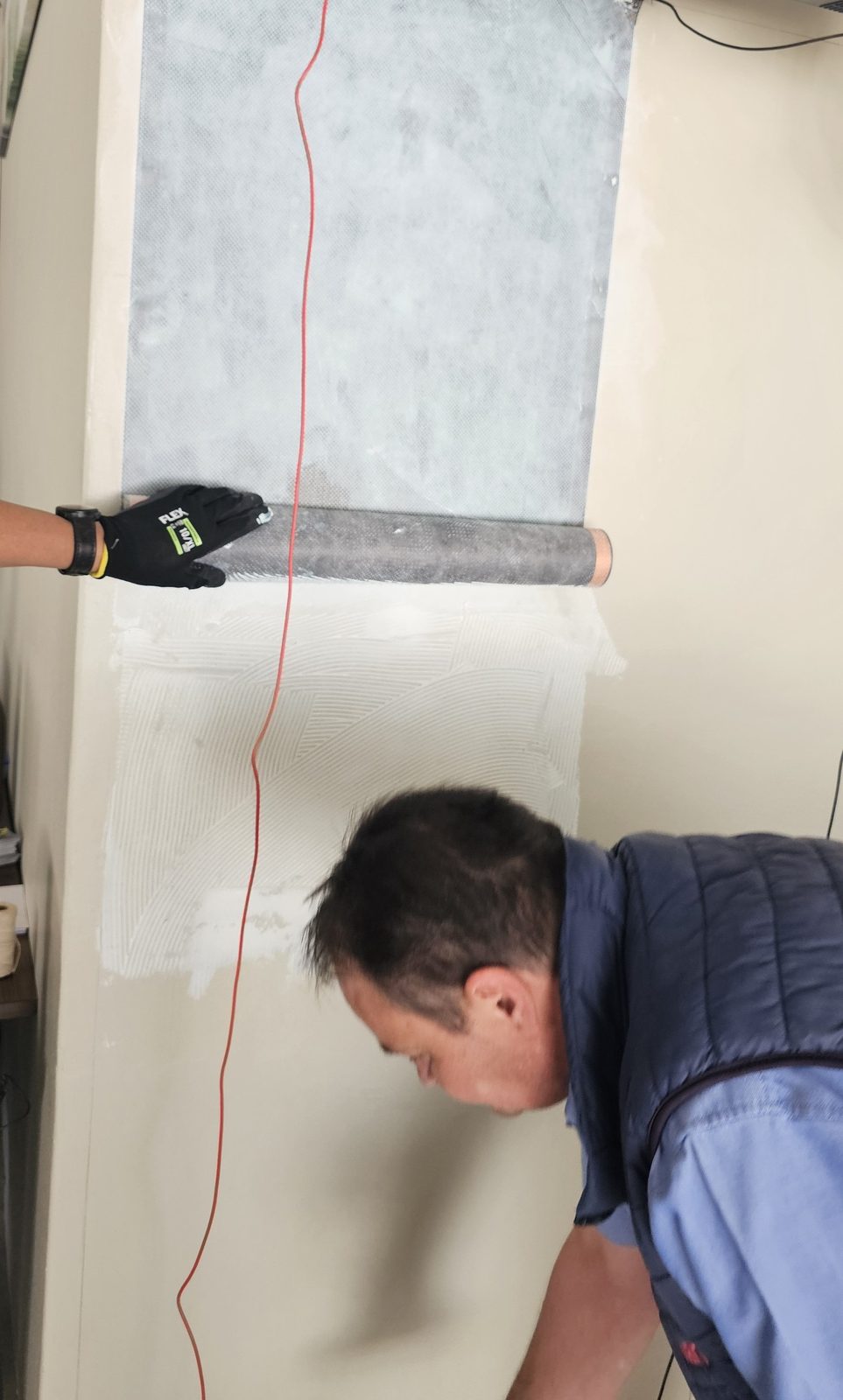
Carbon fibre wall heating uses a patented conductive carbon film bonded to the wall or ceiling surface. A 48 V DC current passes through the film, which radiates infrared warmth directly into the room, the way winter sun warms a wall. There are no hot elements, no fans, no ducts and no moving parts, and the film disappears behind plaster, paint, tiles, wallpaper or Rhino-lite, so the room looks exactly as it did before.
The 48 V matters for two reasons. It's below the SANS 10142 shock-hazard threshold, which is why the film can go behind a child's bedroom wall. And it's the voltage a solar battery already runs at, so the film couples directly to a hybrid inverter and battery: daytime solar goes into the battery, the battery warms the rooms in the evening, and with enough panels the running cost is close to nothing.
Sizing is simple. We design at 50 W per m² of floor, so one 220 W panel warms just over 4 m² of room, and a 20 m² bedroom needs about five panels on the walls or ceiling. That's half the watts an electric floor needs for the same room, because radiant warmth from a wall keeps you comfortable at a lower air temperature, and it's why the running cost comes out at about half at the same tariff, and up to 90% lower when the film runs off your own solar.
Where it fits: an existing home with finished floors, a room above the garage that never gets warm, a flat that's being repainted, a bedroom wing where the living areas already have water underfloor heating. Where it doesn't: a whole new build with the screed still to pour, where water underfloor heating on a heat pump will cost less to run for the life of the house.


Why the cheaper system to install is the dearer one to run
Electric underfloor heating and carbon fibre wall heating turn one unit of electricity into one unit of heat. A heat pump on a water system turns it into three or four. Over a whole house, that gap pays for the difference in installed cost; over one bathroom or one cold room, it doesn't. Freezer floors are a different sum again, on the cold store page.
The underfloor heating cost page puts every heating option we get asked about on one table, per kilowatt-hour of heat delivered: water underfloor heating, electric underfloor heating, carbon fibre wall heating, reverse-cycle aircon, wood stove, gas fireplace and panel heaters. We keep that table on one page so the numbers can't contradict each other, and we update it when the tariffs move.
From this page to a warm floor in three steps
Whichever system you land on, the route is the same and the first step costs nothing.
Underfloor heating installers in Gauteng, the Western Cape and Limpopo
Water and electric underfloor heating from Centurion (Gauteng), Table View (Western Cape) and Polokwane (Limpopo). The site assessment is free within 100 km of each branch; beyond that, travel is quoted as a separate line upfront. One phone number for all three: 010 601 6464.
Gauteng branch (HQ)
Pretoria, Johannesburg, Centurion, Sandton, Midrand, Kempton Park, Hartbeespoort, Krugersdorp, Roodepoort
30 Pretorius Avenue, Lyttelton Manor, Centurion, 0157
010 601 6464
Western Cape branch
Cape Town, Table View, Stellenbosch, Paarl, Somerset West, Cape Winelands
Unit 202, 10 Blaauwberg Road, Table View, Cape Town, 7439
010 601 6464
Limpopo branch
Polokwane, Tzaneen, Mokopane, Bela-Bela, Lephalale, Thohoyandou
47 Platinum Street, Polokwane Ext 17, Polokwane, 0699
010 601 6464
Underfloor heating questions, answered for South Africa
The questions we get before anyone has chosen a system. The water, electric, wall heating and cold store pages each have their own FAQ for the detail.
Which is better, water or electric underfloor heating?
Neither is better; each is right for a different job. Water (hydronic) underfloor heating is the better system for a whole home or a new build: it costs more to install but an inverter heat pump makes three to four units of heat per unit of electricity, so it's the cheapest whole-home heating to run. Electric underfloor heating is the better system for one or two rooms being tiled: it costs a fraction to install, goes in with the tile adhesive and the area is small enough that its one-to-one running cost doesn't matter. The crossover is around the third room, where the running cost of resistive heating starts to outrun the saving on the install.
What does underfloor heating cost in South Africa?
Water underfloor heating installed by Synergy costs R1,350 to R1,750 per m² incl VAT for most whole homes, from R950 in specific cases, with partial homes at R1,400 to R1,800 and bathrooms only from R1,500. Electric underfloor heating costs R635 to R865 per m² incl VAT for larger tiled rooms and R920 to R1,325 for bathrooms, kitchens and other wet rooms, with the Warmup cable, floor probe, thermostat, labour and CoC included; a 6 m² bathroom is R5,500 to R8,000. All are our own 2026 installed prices from three branches and are fixed in writing after a free site assessment. The underfloor heating cost page shows the phases, two real jobs priced end to end and what a builder needs to provide.
Is underfloor heating expensive to run?
It depends entirely on which kind. Electric underfloor heating is resistive: one kilowatt-hour in, one kilowatt-hour of heat out, about R4.15 per kWh at 2026 municipal rates, so a bathroom for a few hours a day costs a few hundred rand a month and a whole house costs about four times what the same house costs on a heat pump. Water underfloor heating with an inverter heat pump delivers three to four units of heat per unit of electricity, up to 70% cheaper than resistive heating and up to 90% cheaper when the heat pump runs on solar PV. That's why we put electric in bathrooms and water in houses.
Can I have underfloor heating in an existing house?
Yes, but the floor decides which kind. If a room is being retiled, electric underfloor heating goes in with the tile adhesive, adds about 5 to 8 mm under the tile and needs no screed. If the whole house is being renovated and the floors are coming up, water underfloor heating is possible provided 40 to 70 mm of screed depth can be achieved over the pipes. If the floors are finished and staying that way, neither works, and carbon fibre wall heating is the honest recommendation: the film goes onto the wall or ceiling during redecorating and the room is back in use in days.
What is carbon fibre wall heating, and is 48 V safe?
A conductive carbon fibre film bonded to the wall or ceiling and covered by the normal finish: plaster, paint, tiles, wallpaper or Rhino-lite. A 48 V DC current through the film makes it radiate infrared warmth into the room, with no hot elements, fans or moving parts. 48 V DC is below the SANS 10142 shock-hazard threshold, which is why it can go behind a child's bedroom wall, and it's the voltage a solar battery already runs at, so the system couples directly to a hybrid inverter. Every installation is technician-installed, electrician-certified and issued with a CoC. We size it at 50 W per m² of floor, so one 220 W panel warms just over 4 m² of room, half the watts of an electric floor; whole-home systems start from about R1,150 per m² of floor. The carbon fibre wall heating page has the components, the electrical design and the FAQ.
Can I mix water, electric and wall heating in one home?
Yes, and it's often the smartest design. Water through the living areas and bedrooms where the area is large and the heat pump earns its keep; an electric floor in a guest bathroom or a room that only needs heat for twenty minutes in the morning; carbon fibre wall heating in the finished room above the garage that the pipes can't reach. We design, install and certify the mix under one CoC, so there's one installer to call.
Does underfloor heating work with solar power?
Both kinds do, because both are electric loads. Water underfloor heating gains the most: the heat pump runs on daytime solar and the screed stores that heat into the evening, and with a battery a system can run almost fully off-grid in Gauteng, Cape Town and Limpopo winters. An electric bathroom floor is a small load that any solar system carries; a whole house on resistive cable is a 20 kW load that no array makes sensible. Synergy designs the solar PV system and the heating together so the inverter and battery are sized for both.
Which floor finishes work with underfloor heating?
Tile, porcelain and natural stone are the best conductors and work with both systems. Engineered wood, specified vinyl and polished screed work over water systems; the wood and vinyl zones are designed to a maximum floor surface temperature of 27 degrees, held by the floor probe at the thermostat, to protect the finish. Synergy's electric installations are undertile cable only: laminate and carpet can take foil heating pads, but those are laid by flooring fitters, not by us, so for a laminate or carpeted room that's staying that way the honest answer is carbon fibre wall heating. Thick carpet and solid timber insulate the heat away from the room whatever is under them.
Is underfloor heating worth it in a South African winter?
In Gauteng and Limpopo the nights are cold and dry for four months and the days are sunny, which is close to ideal for a heat pump on solar. In the Western Cape the winter is longer, wetter and colder indoors than most people expect, and radiant floor heat is the difference between a damp house and a comfortable one. Radiant heat warms people and objects rather than air, so households are comfortable at a lower thermostat setting than with a wall heater, and every degree lower saves energy.
Do you heat freezer and cold store floors?
Yes, but it's a different job with a different purpose. Under a freezer or cold store the ground can freeze and heave, cracking the slab; the fix is a warm glycol loop under the floor that keeps the subfloor a few degrees above zero, designed to the mechanical engineer's heat load, pressure-tested through the whole build and signed off as one system. It's on its own page, cold store floor heating, from about R1,050 per m² installed with condenser heat recovery, and it's quoted per project.
How do I get a quote for underfloor heating?
Book a free site assessment with the form below, call 010 601 6464 or WhatsApp 069 272 5602. Our system designers visit, measure and recommend a system, and you get a fixed written quote. The assessment is free within 100 km of Centurion, Table View and Polokwane; beyond that, travel is quoted upfront as its own line.
The space heating pages
Build a whole energy-efficient home with Synergy
Underfloor heating works best as part of a complete energy strategy. The same team designs and maintains your solar, battery and hot water.
Trusted by homeowners across South Africa
Real reviews from real Synergy customers, sourced directly from our Google Business Profile.
"Thank you Jacques and Jaco from Synergy Energy Solutions. Your professionalism and excellent service resulted in a great solar installation and solution. We are very happy and would recommend you to anyone looking for a residential or commercial solution. We can vouch for both. Well done."
"What an absolute pleasure to have Synergy as my solar provider. After I have been scammed previously by a 'reputable' company, I was unsure where to turn next. Synergy was recommended and from day one they exceeded my wildest expectations. Very professional, always friendly, prompt service and the list goes on. Thank you Jean and team, you guys rock!"
"What a pleasure to deal with Synergy, it's a company with experience and after-care service. Jacques always takes my calls (and there were many) during and after the installation, always willing to assist, always monitoring our system for optimal usage. Our site was always clean, they were always on time. Jacques and team, thank you, it's much appreciated."
"Synergy Energy Solutions is an excellent company, very good workmanship as requested. The system looks neat and professional. Thank you also for the over-and-above tasks that were performed for the preparation of the installation. The system has been running for a month now, I was always immediately assisted by competent personnel. The form, fit and function of the system is awesome!"
"I have used Synergy Solutions to do solar installations on two separate occasions. In both instances I found them to be speedy, professional, friendly and extremely competent. I can highly recommend them."
Read all 85 reviews on our Google Business Profile.
About Synergy Energy Solutions
Established in 2010 and headquartered in Centurion, Synergy Energy Solutions has spent 16 years designing solar PV, battery storage, heat pump water heating and hydronic underfloor heating systems for residential and commercial customers across Gauteng, the Western Cape and Limpopo.
Our industry memberships and certifications
Synergy Energy Solutions is accredited by South Africa's electrical, solar and battery industry bodies, and by the manufacturers we install, your assurance of compliant, professional installation across every solar PV, battery and underfloor heating system we deliver.

ECA
Member of the Electrical Contractors' Association of South Africa, the industry body for registered electrical contractors.

PV GreenCard
An industry-led quality label for safe, compliant small-scale solar PV installations across South Africa.

SAPVIA
Member of the South African Photovoltaic Industry Association, the body representing the solar PV industry and setting installation, training and quality standards.
Tesla Energy Certified Installer
Trained and authorised by Tesla to design, install and service Powerwall 3 systems in South Africa.

Sigenergy Certified Installer
Factory-trained to design, install and commission SigenStor solar, battery and EV charging systems.

Sunsynk Approved Installer
Approved to design, install and commission Sunsynk hybrid inverters and Sunsynk lithium battery systems.

Deye Recognised Installer
Experienced in the design, installation and commissioning of Deye hybrid inverters and Deye-compatible batteries.
Not sure which of the three? That's what the site assessment is for
Book a free, no-obligation visit. Our system designers will look at your floors, your plans and your budget, tell you whether water, electric or wall heating fits (or which mix), and give you a fixed written quote for it.
Prefer to talk? Call 010 601 6464 or WhatsApp 069 272 5602